HOME

ABOUT THE RANCH
HUNTING

FISHING

HISTORICAL REENACTMENT

HAY
BEEF
SMALL GRAINS

TIMBER

You are here
WILDLIFE

1
EQUIPMENT

CONTACT US

KEEP UPDATED


Timber on Horseshoe Bend Ranch:
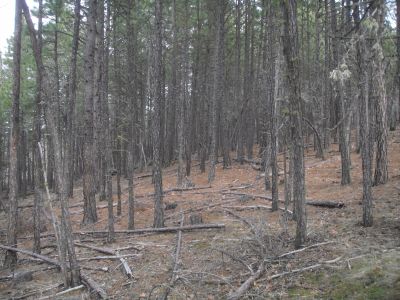
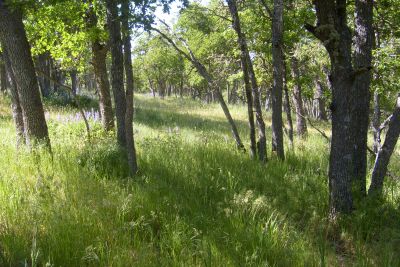
 Managing timberlands is an important part of what goes on at Horseshoe Bend Ranch. The ranch includes several hundred acres of timberland, including ecologically important White Oak Forests and forest that are infested with Western Gray Squirrels, a Washington State Listed Threatened Species.
Our forest lands are split about evenly between land in the steep Little Klickitat Canyon and lands on more gental terrain. The canyon forests are mostly not managable due to very steep slopes which are not economical to harvest under current state forest harvest regulations. Most of the canyon has been harvested at various points between 1920 and 1970 and is now vigerously regrowing. It will continue to do so until an inevitable forest fire destroys the forest in the canyon. Hopefully the fire will not burn so hot that it sterilizes the soil by killing the beneficial microbes and seeds in it, however since we have little control over thinning in the canyon to prevent this, it is a hopeful wish at best.
 Forest lands outside of the canyon are mostly Ponderosa Pine and Oregon White Oak, with scattered other species such as Douglas Fir. These forests are a little more managable, but unfortunately due to their infestation with Western Gray Squirrels they can only be minimally managed at this point. Over 400 Western Gray Squirrel nests infest these forests, and each one must be protected by a circle which severely limits harvest operations on over 10 acres of land.
We eagerly look forward to Western Gray Squirrels being delisted from from the Washington State Listed Threatened Species list. Until that time, we must watch as overgrown areas of our forest succumb to beetle infestations, struggle to get enough resources, and ultimately are destroyed by fire. It is ironic that rules meant to protect a single species at one point in time untimately will result not only in the destruction of the habitat for that one single species, but also the destruction of the habitat of every other species that depends on the forest, along with destruction of the carbon saving and erosion preventing properties of the forest as a whole.
 |
 |
 |
 |
 |
 |
 |
 |